Table of Contents
- Introduction
- What Is Turnkey PCBA?
- Key Project Risks in Traditional PCBA Procurement
3.1 Supply Chain Fragmentation & Delays
3.2 Component Quality & Compatibility Risks
3.3 Unclear Accountability & Rework Costs
3.4 Compliance & Traceability Gaps
- How Turnkey PCBA Mitigates Core Project Risks
4.1 Single-Point Accountability Eliminates Blame Games
4.2 Streamlined Supply Chain Cuts Delays & Shortages
4.3 Proactive DFM & Quality Control Reduce Rework
4.4 End-to-End Traceability Ensures Compliance
4.5 Scalability Minimizes Transition Risks
- Tangible Risk Reduction Metrics for Buyers
- Why Procurement Teams Prioritize Turnkey PCBA
- Conclusion
1. Introduction
In electronics manufacturing,
turnkey PCBA has evolved from a convenience option to a strategic risk-reduction tool for procurement professionals. For buyers managing complex projects, fragmented PCBA sourcing—coordinating separate PCB fabricators, component suppliers, and assembly houses—exposes projects to costly delays, quality failures, and accountability gaps.
Turnkey PCBA consolidates the entire process: DFM review, PCB fabrication, component sourcing, SMT/THT assembly, testing, and delivery—under one accountable partner. This article explores how turnkey PCBA directly cuts project risk, delivering reliability, cost predictability, and faster time-to-market for procurement teams. For buyers, understanding these risk-mitigation benefits is critical to optimizing sourcing strategies and protecting project budgets.
2. What Is Turnkey PCBA?
Turnkey PCBA is a full-service manufacturing model where a single provider owns all stages of PCB production, from design validation to finished, tested boards. Unlike consignment (customer-supplied materials) or partial turnkey (limited supplier responsibility), full turnkey PCBA requires only your Gerber files, BOM, and specifications—your partner handles everything else.
Core turnkey PCBA services include:
- Design for Manufacturability (DFM) and Design for Test (DFT) reviews
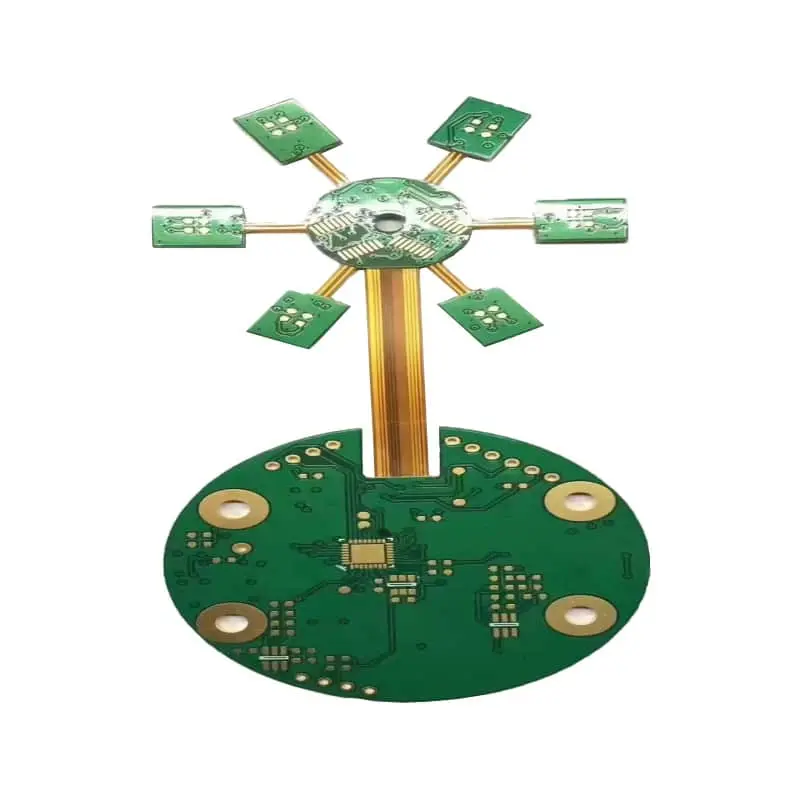
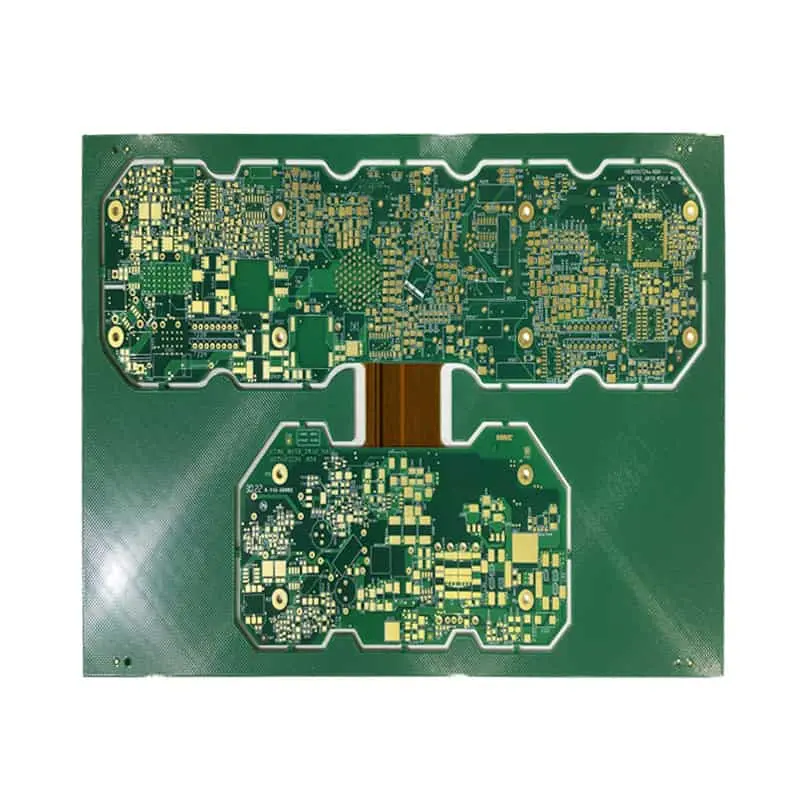
- Precision PCB fabrication (multilayer, high-speed, rigid-flex)
- Global component sourcing (authorized distributors, counterfeit prevention)
- SMT/THT assembly (01005 micro-components, fine-pitch ICs)
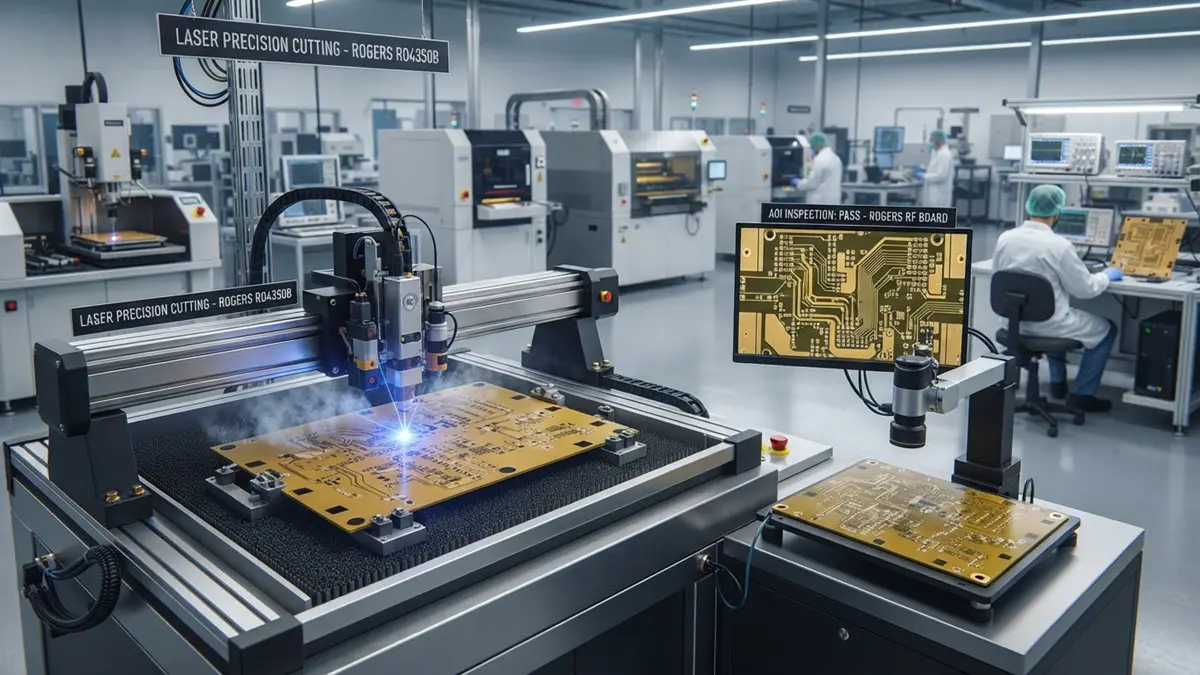
- Rigorous testing (AOI, X-ray, flying probe, functional testing)
- Final packaging, labeling, and global delivery
This end-to-end integration is why turnkey PCBA is a cornerstone of risk reduction for modern electronics projects.
3. Key Project Risks in Traditional PCBA Procurement
Before diving into solutions, it’s critical to identify the top risks buyers face with fragmented PCBA sourcing—risks that turnkey PCBA directly addresses.
3.1 Supply Chain Fragmentation & Delays
Coordinating 3–5+ vendors creates multiple failure points. Each handoff (PCB fab → component delivery → assembly) introduces delays, miscommunication, and scheduling conflicts. Industry data shows 20–30% of fragmented PCBA projects miss deadlines, with delays averaging 4–6 weeks. For buyers, this means missed product launches, penalty fees, and lost market share.
3.2 Component Quality & Compatibility Risks
Sourcing components from multiple suppliers increases exposure to counterfeits, obsolete parts, and mismatched components. A single incorrect resistor or counterfeit IC can trigger full-batch failures, costing 25%+ of the total project budget in rework and scrap. Buyers also face MOQ (minimum order quantity) hurdles, excess inventory costs, and price volatility with uncoordinated sourcing.
3.3 Unclear Accountability & Rework Costs
When issues arise—defective PCBs, poor soldering, or failed tests—fragmented vendors often shift blame (“the PCB was bad,” “components were faulty”). This “blame game” prolongs resolution, increases rework costs, and leaves buyers without a clear path to accountability. For procurement teams, this means wasted hours in vendor arbitration and unplanned budget overruns.
3.4 Compliance & Traceability Gaps
Regulated industries (medical, automotive, industrial) require full traceability (component lot numbers, process data, test results) and compliance with ISO 9001, RoHS, or FDA standards. Fragmented sourcing makes end-to-end traceability nearly impossible, exposing buyers to regulatory fines, product recalls, and reputational damage.
4. How Turnkey PCBA Mitigates Core Project Risks
Turnkey PCBA eliminates the root causes of traditional PCBA risk by centralizing ownership, streamlining workflows, and embedding quality at every stage. Below are the key risk-reduction benefits for buyers.
4.1 Single-Point Accountability Eliminates Blame Games
The biggest advantage of turnkey PCBA is single-point accountability. One partner owns every stage—from DFM review to final testing—so there is no finger-pointing if issues arise. If a board fails testing, your turnkey PCBA provider resolves it at their cost, with clear escalation paths and no vendor arbitration.
For buyers, this reduces:
- 30–50% of internal procurement time spent coordinating vendors
- Rework costs by 60% vs. fragmented projects
- Project downtime from issue resolution
4.2 Streamlined Supply Chain Cuts Delays & Shortages
Turnkey PCBA providers leverage global supplier networks, bulk purchasing power, and real-time inventory data to eliminate supply chain volatility. Key risk-mitigation features include:
- Proactive shortage management: Advanced BOM analysis identifies long-lead or obsolete components early, with pre-approved alternative parts
- Bulk purchasing discounts: 10–20% lower component prices than individual buyers, reducing cost volatility
- Parallel processing: PCB fabrication and component sourcing happen simultaneously, cutting lead times by 30–40%
- No MOQ hurdles: Providers combine orders across clients to meet supplier MOQs, eliminating excess inventory risk
For procurement teams, this means turnkey PCBA delivers 98%+ on-time delivery rates, even for complex or high-mix projects.
4.3 Proactive DFM & Quality Control Reduce Rework
Turnkey PCBA embeds quality at the design stage with rigorous DFM/DFT reviews—catching issues like mismatched footprints, missing test points, or assembly bottlenecks before production. This proactive approach eliminates 80% of common manufacturing errors that cause rework.
During production, turnkey PCBA providers enforce unified quality control:
- 100% AOI/X-ray inspection for solder joint integrity
- First Article Inspection (FAI) for design validation
- Real-time process monitoring and documentation
For buyers, this reduces the risk of post-production failures, warranty claims, and costly scrap—critical for high-reliability products.
4.4 End-to-End Traceability Ensures Compliance
Turnkey PCBA delivers full, digitized traceability for every board: component lot numbers, fabrication dates, assembly parameters, and test results. This documentation meets strict regulatory requirements (ISO 13485 for medical, IATF 16949 for automotive) and simplifies audits.
For procurement teams in regulated industries, turnkey PCBA eliminates compliance risks, reduces audit preparation time, and protects against recalls or fines.
4.5 Scalability Minimizes Transition Risks
Projects often scale from prototypes to mass production, creating transition risks with fragmented sourcing. Turnkey PCBA providers support the full product lifecycle:
- Rapid prototypes (5–10 units, 5–7 day turnaround)
- Pilot runs (100–500 units) for field testing
- High-volume production (10,000+ units) with consistent quality
This seamless scaling eliminates the risk of quality inconsistencies or delays when switching vendors, reducing project risk at every growth stage.
5. Tangible Risk Reduction Metrics for Buyers
Procurement professionals rely on data to evaluate sourcing strategies. Below are measurable risk-reduction outcomes of turnkey PCBA vs. fragmented sourcing:
| Risk Metric | Fragmented PCBA | Turnkey PCBA | Risk Reduction |
|---|
| Project delay rate | 20–30% | <2% | 90%+ |
| Rework/scrap costs | 25% of budget | <5% of budget | 80%+ |
| Vendor coordination time | 30–50% of procurement hours | <10% of procurement hours | 70%+ |
| Counterfeit/obsolete component risk | High (15–20% of BOM) | Low (<1% of BOM) | 95%+ |
| Compliance audit failures | Common (30% of projects) | Rare (<5% of projects) | 85%+ |
Data compiled from industry reports and client case studies
6. Why Procurement Teams Prioritize Turnkey PCBA
For modern procurement professionals, turnkey PCBA aligns with core goals: risk mitigation, cost predictability, and supply chain resilience. Beyond technical benefits, turnkey PCBA delivers strategic value:
- Focus on core innovation: Free engineering and procurement teams from manufacturing details to focus on product design and market growth
- Budget predictability: Fixed-price contracts with clear deliverables eliminate unplanned costs from delays or rework
- Global scalability: Partner with a single provider for projects across regions, standardizing quality and processes
In an era of global supply chain uncertainty, turnkey PCBA is no longer just a manufacturing option—it’s a risk-management imperative for procurement teams.
7. Conclusion
Turnkey PCBA transforms electronics manufacturing risk from a constant threat to a manageable variable. By centralizing accountability, streamlining supply chains, embedding proactive quality control, and ensuring compliance, turnkey PCBA directly eliminates the top risks buyers face with fragmented sourcing.
For procurement professionals, the message is clear: turnkey PCBA reduces delays, cuts rework costs, simplifies compliance, and frees your team to focus on strategic goals. In a competitive market where project reliability can make or break success, turnkey PCBA is the smart choice for risk mitigation and long-term project success.
Partner with a vetted turnkey PCBA provider today to protect your projects, optimize budgets, and accelerate time-to-market.
Still, need help? Contact Us: pcb@pcbcoming.com
Need a PCB or PCBA quote? Quote now
About Author
David Chen https://www.linkedin.com/in/pcbcoming/
David Chen boasts an extensive professional background in PCBA manufacturing, PCBA testing, and PCBA optimization, with specialized expertise in high-precision PCBA fault analysis and rigorous PCBA reliability testing. Skilled in complex circuit design and cutting-edge advanced PCB manufacturing processes, he delivers solutions that elevate product durability and performance across industrial applications. His technical articles focusing on PCBA manufacturing workflows and testing methodologies are widely cited by industry peers, research institutions, and technical platforms, solidifying his reputation as a recognized technical authority in the global circuit board manufacturing sector.